

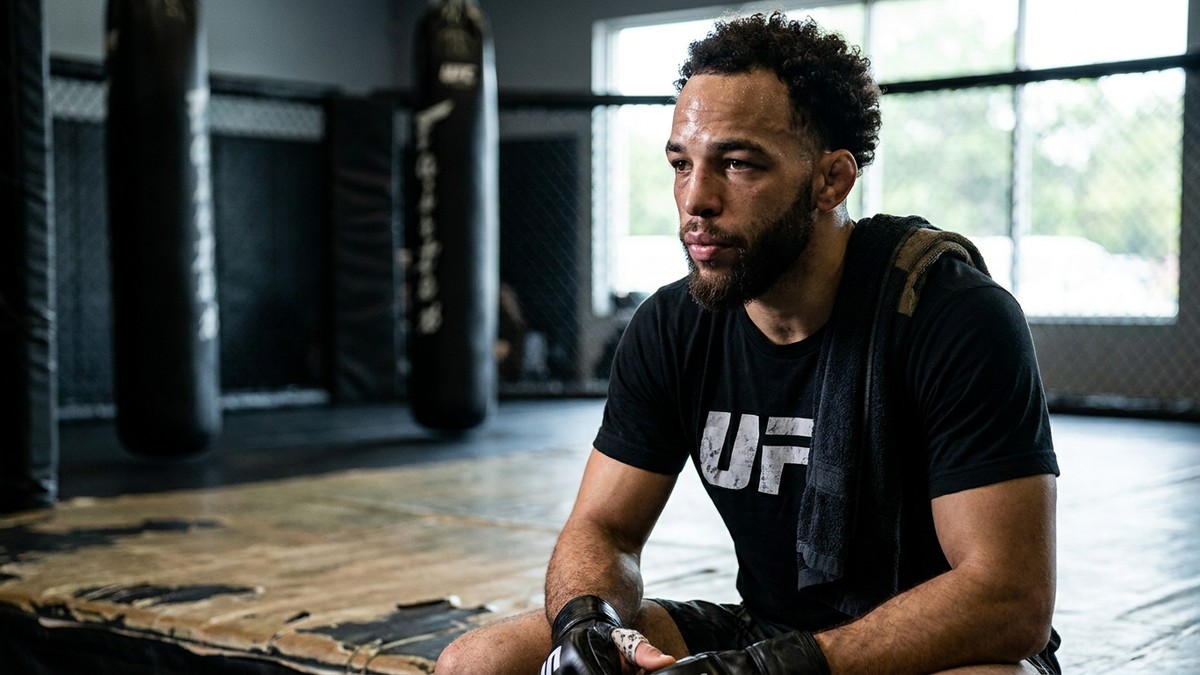
Josiah Harrell returns to the Octagon carrying a lesson rather than an unbeaten image. His UFC debut arrived on short notice against Jacobe Smith and ended with Smith stopping him with ground strikes. It was Harrell’s first career loss and a harsh opening experience in the promotion, but he has chosen to examine the result instead of treating it as something to hide from. Harrell said the defeat showed him that he could be beaten, a realization that changed how he thinks about ego, pressure and the demand to appear perfect. He will now meet Brazil’s Elves Brener in a lightweight bout on the preliminary card of UFC Fight Night: Rosas Jr vs Barcelos. The matchup gives Harrell a chance to pursue his first UFC win, but his stated focus is wider than a correction on his record. He wants to return with discipline, apply what he learned and give viewers a performance that makes them want to see him compete again.
The confirmed chronology matters because Harrell does not separate his return from what happened in his debut. He accepted Smith on short notice, absorbed a difficult result and reviewed the moments that led to it. In his account, the loss removed some of the weight attached to remaining unbeaten. Harrell said he could identify mistakes and ways to learn from them, while the experience also kept his mind open to the idea that perfection is not required to move forward. That is the foundation of his return against Brener. Rather than framing the fight as an attempt to erase the past, Harrell has presented it as an opportunity to progress in the next challenge. His comments also make clear that he respects Smith, describing him as a good person with a future in the sport whether or not they ever meet again.
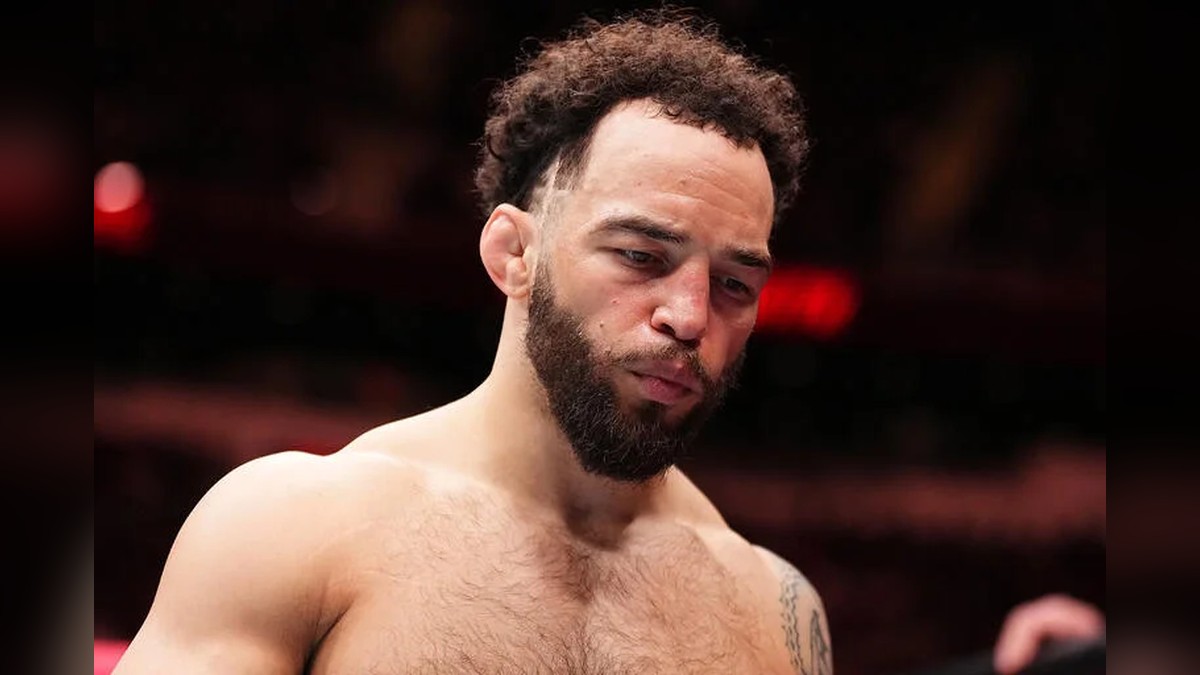
Harrell’s debut reshaped his perspective
Harrell said he learned a valuable lesson from losing in the Octagon. He explained that ego is necessary for a fighter, but it can become a problem when success creates too much comfort and gives opponents room to do what they want. Smith’s win forced Harrell to assess that balance. He said he reviewed the fight and found many mistakes from which he could learn. The result was painful, but it also gave him a sense of freedom because the pressure of protecting an unbeaten record was gone. That response is central to the editorial explanation of Harrell’s return.
He is not arguing that defeat is desirable; he is saying it can be examined honestly and used for growth. Harrell said he does not want people watching his story to believe they must be perfect to do something meaningful. For him, the next step is to keep progressing in one direction. His perspective was shaped by challenges that went beyond one UFC appearance. A routine UFC medical ahead of a planned debut discovered a rare brain condition, and Harrell underwent brain surgery. He also recalled his fight with Tracy Reeder as the most difficult contest of his career mentally. Harrell said he did not want to fight anymore at that point, but Reeder later helped him in the corner. That support made Harrell reconsider how much his career was only about himself. The experience helped him connect fighting with a larger desire to inspire others to progress and do something valuable with their lives.
Harrell describes fighting as an ego-driven pursuit because he enjoys pushing himself, yet he also says his motivation reaches beyond his own performance. He wants to help people in whatever way he can, whether that inspiration comes through his work, his personality or his willingness to continue after setbacks. That is why the reader-value explanation is visible in his own words: the loss did not become a reason to stop; it became evidence that he could continue without the demand to be flawless. The Brener bout is the practical test of that approach. Harrell wants to compete with purpose while recognizing the need for control. His return is not only about proving that he can win after a loss. It is about showing that a fighter can learn from pressure, accept an imperfect result and still move forward with a clearer sense of why he is competing. The fight therefore carries both a sporting objective and the personal progression Harrell has repeatedly emphasized.
Brener is the next disciplined challenge
Harrell faces Elves Brener in a lightweight battle on the preliminary card of UFC Fight Night: Rosas Jr vs Barcelos. He described Brener as tough and as a veteran of the sport, especially in the UFC. Harrell expects an opponent who will be present for the full contest, which makes discipline the key part of his stated plan. He said the goal remains to put Brener out, but he also stressed that he does not want to enter an uncontrolled gun-slinging battle. That balance reflects what Harrell took from the Smith fight. He wants to offer fans an entertaining contest, but not by accepting unnecessary damage. After their bout, Smith contacted Harrell to check on him, and Harrell said he appreciated the professional gesture.
Harrell’s response was that his main concern was not being able to give fans what they deserved in his first UFC appearance. As he prepares for Brener, he has described the challenge as giving fans a fight they deserve without taking brain damage he does not deserve. Harrell’s desired reaction after the fight is also straightforward. He said he hopes people enjoy it, and that the best feedback would be a fan asking when he will fight again. That standard places the emphasis on the quality and control of his performance rather than on an image of perfection. The confirmed points of his path into this matchup are: Harrell accepted his UFC debut against Jacobe Smith on short notice and was stopped with ground strikes.
Harrell reviewed the loss, identified lessons and said it removed the weight of trying to remain perfect. Harrell now meets Elves Brener in a lightweight bout and says discipline is essential to his approach. The following table keeps the central sequence clear: Harrell timeline point | Confirmed detail UFC debut | Harrell faced Jacobe Smith on short notice and was stopped with ground strikes. Return matchup | Harrell is set to face Elves Brener at UFC Fight Night: Rosas Jr vs Barcelos. For Harrell, those details are connected. The debut supplied the immediate lesson, his earlier adversity added perspective and the Brener matchup provides the next place to put that perspective into action.
- Harrell accepted his UFC debut against Jacobe Smith on short notice and was stopped with ground strikes.
- Harrell reviewed the loss, identified lessons and said it removed the weight of trying to remain perfect.
- Harrell now meets Elves Brener in a lightweight bout and says discipline is essential to his approach.
| Harrell timeline point | Confirmed detail |
|---|---|
| UFC debut | Harrell faced Jacobe Smith on short notice and was stopped with ground strikes. |
| Return matchup | Harrell is set to face Elves Brener at UFC Fight Night: Rosas Jr vs Barcelos. |
Josiah Harrell enters his meeting with Elves Brener seeking his first UFC win, but he has framed the return around progression rather than perfection. His loss to Jacobe Smith taught him to review mistakes and release the burden of an unbeaten record. His experiences with Tracy Reeder and the brain condition that led to surgery gave that outlook greater personal weight. Against Brener, Harrell wants to stay disciplined, pursue a finish and give fans a performance they enjoy without turning the contest into an unnecessary exchange. If viewers leave asking when he will compete again, Harrell has said that would be the response he wants most.
Fight Talk
Share your take on this story
Start the Conversation
Be the first to share your take. Discuss the fight, reactions, and predictions with other fans.