

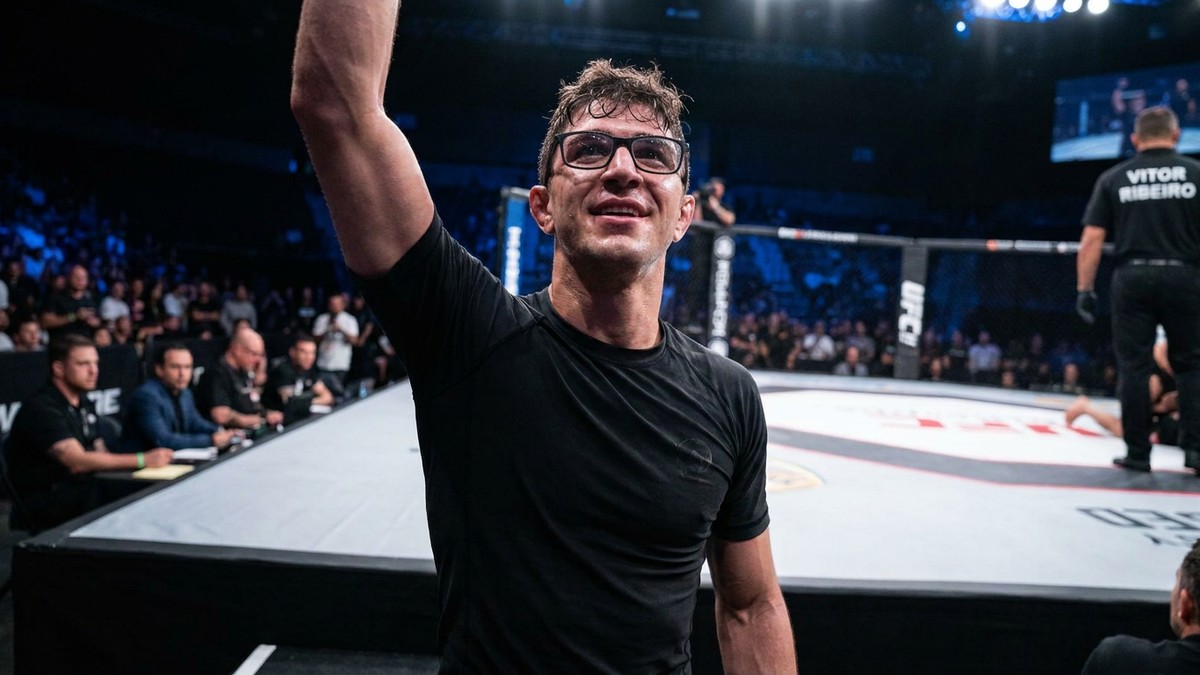
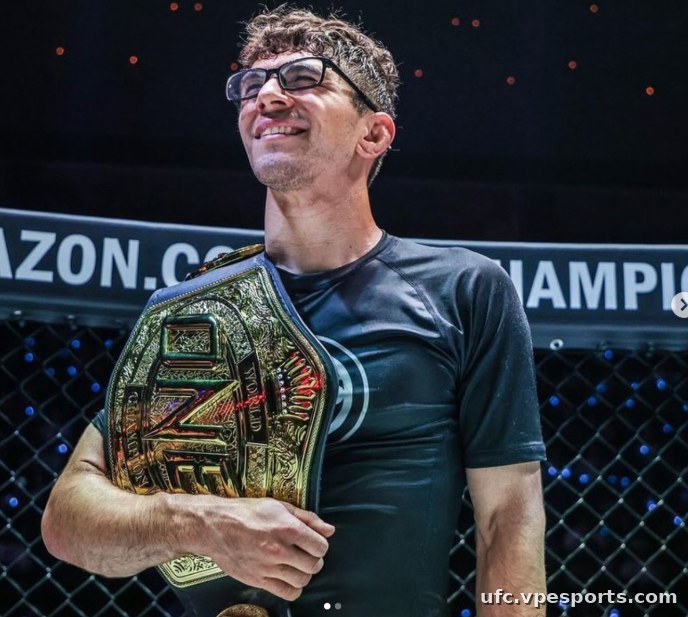
Mikey Musumeci closed UFC BJJ 11 with a unanimous-decision victory over Bryce Mitchell after a demanding 15-minute main event at Meta APEX in Las Vegas. Musumeci did not secure the submission that he repeatedly pursued, but his positional work, late attacks and ability to create offense from difficult spots carried him through a tightly contested grappling match. Mitchell proved durable throughout, surviving several meaningful submission threats and forcing Musumeci to work until the final seconds.
The central wrinkle was the pair’s agreement that leglock submissions would not be used during the match. Musumeci nevertheless used leglock positions as a route to sweeps and better placement, rather than as finishing attempts. That distinction became important almost immediately, as his first use of the hold drew boos from spectators who believed he had abandoned the agreement. The match then made clear how Musumeci interpreted the restriction: he used the entanglements to change the geometry of exchanges, improve his position and resume attacks elsewhere. Mitchell’s pressure and composure ensured those improvements did not turn into an early finish, setting up a three-round contest decided by the judges.
Mikey Musumeci creates chances in every round
Mikey Musumeci’s most dangerous opening-round sequence came after he worked from guard against Mitchell’s heavy top pressure. A leglock-based sweep gave Musumeci a better attacking position, and he quickly connected his offense into a D’Arce choke. Mitchell was wheezing and gasping while defending, yet escaped before Musumeci switched rapidly to a power guillotine attempt. That escape was significant because it prevented Musumeci from converting his clearest early threat while also showing Mitchell could remain in the match under sustained pressure. Musumeci continued to find ways to alter position rather than simply accept Mitchell’s top game. Near the end of the first round, he used the slope of the Bowl for an arm-drag takedown just before the horn. The action reflected the match’s recurring pattern: Mitchell could apply pressure and make Musumeci work, while Musumeci could create transitions that forced Mitchell to defend. Neither athlete produced a decisive finish, but Musumeci kept presenting the judges with offensive moments and advancement-oriented exchanges.
Round 2 followed a similar competitive shape. Mitchell stalked Musumeci at the start and again looked to establish top pressure once the action reached the mat. Musumeci answered with another leglock-assisted positional improvement, then pressed the attack while Mitchell stayed composed and worked back toward Musumeci’s guard. Late in the round, Musumeci searched for a finish but could not isolate an arm as Mitchell defended the danger. The bout therefore entered its final frame without a submission and with both grapplers still contributing meaningful stretches of action. The final round gave Musumeci his strongest sustained control. After referee Vitor Ribeiro separated the athletes, Musumeci launched a flying triangle attempt, only for Mitchell to power slam him to the mat. Musumeci then took greater control as the round progressed, found Mitchell’s back and secured a body triangle. He attacked with a rear-naked choke before transitioning to an armbar, but Mitchell kept his arm compact and denied the extension. Mitchell made one last charge in the closing seconds to force Musumeci to the mat, yet the judges ultimately awarded Musumeci the decision.
What defined Mikey Musumeci’s victory
Mikey Musumeci’s win was built on repeated initiative rather than one completed submission. The D’Arce choke and guillotine in Round 1, the continued arm isolation work in Round 2, and the back control and armbar transition in Round 3 gave his performance a clear offensive throughline. Mitchell’s resistance mattered just as much to the final result: he escaped the early chokes, defended Musumeci’s late arm attacks and remained active enough to keep the match competitive until time expired. The result also clarifies why the leglock issue remained central without defining the entire contest. Musumeci did not use a leglock submission to end the match. Instead, he used those positions to sweep and advance, then pursued chokes and an armbar once he had improved his placement. That approach allowed Musumeci to maintain an attacking identity within the stated pre-match limitation. The unanimous decision confirmed that his cumulative offense and positional gains were enough after all three rounds.
- Round 1: Mikey Musumeci used a leglock-assisted sweep, then threatened Bryce Mitchell with a D’Arce choke and a power guillotine.
- Round 3: Mikey Musumeci took Mitchell’s back, controlled him with a body triangle and transitioned from a rear-naked choke attempt to an armbar.

| Match phase | Confirmed Musumeci development |
|---|---|
| Opening round | Used a leglock position to sweep and improve position before attacking with a D’Arce choke and guillotine. |
| Final round | Recovered after a flying triangle attempt was power slammed, then found back control and attacked submissions. |
Mikey Musumeci left UFC BJJ 11 with the main-event decision after a match that demanded persistence as much as technique. Mitchell repeatedly escaped danger and denied a finish, but Musumeci created the more consistent attacking opportunities across the three rounds. His sweeps, chokes, back control and armbar attempt supplied the decisive body of work in Las Vegas.

Fight Talk
Share your take on this story
Start the Conversation
Be the first to share your take. Discuss the fight, reactions, and predictions with other fans.