


Jon Jones was placed at the center of a pointed discussion on Joe Rogan’s JRE MMA Show after Gable Steveson’s knockout defeat at UFC 331. Rogan did not present a definitive explanation for the result, but he questioned whether being around a fighter regarded as the GOAT could create a difficult mental trap for an athlete still building an MMA career. The issue was raised after Steveson, a 2020 Olympic gold medalist in freestyle wrestling, was knocked out cold by Sean Sharaf in 12 seconds during his second UFC appearance.
Jones had predicted that Steveson could become champion by the end of 2026. That prediction now sits against a much different immediate picture following UFC 331, where the heavyweight belt was described as a sizable distance away after the loss. Rogan’s point was not that confidence is inherently harmful. Instead, he described the challenge of holding confidence and caution together while trying to become an elite fighter. Jones, who has been gaining coaching experience since Steveson committed to an MMA transition, became the figure through whom Rogan illustrated that concern. The distinction matters: Rogan offered a view of a possible mindset issue, rather than a confirmed account of why the knockout happened.
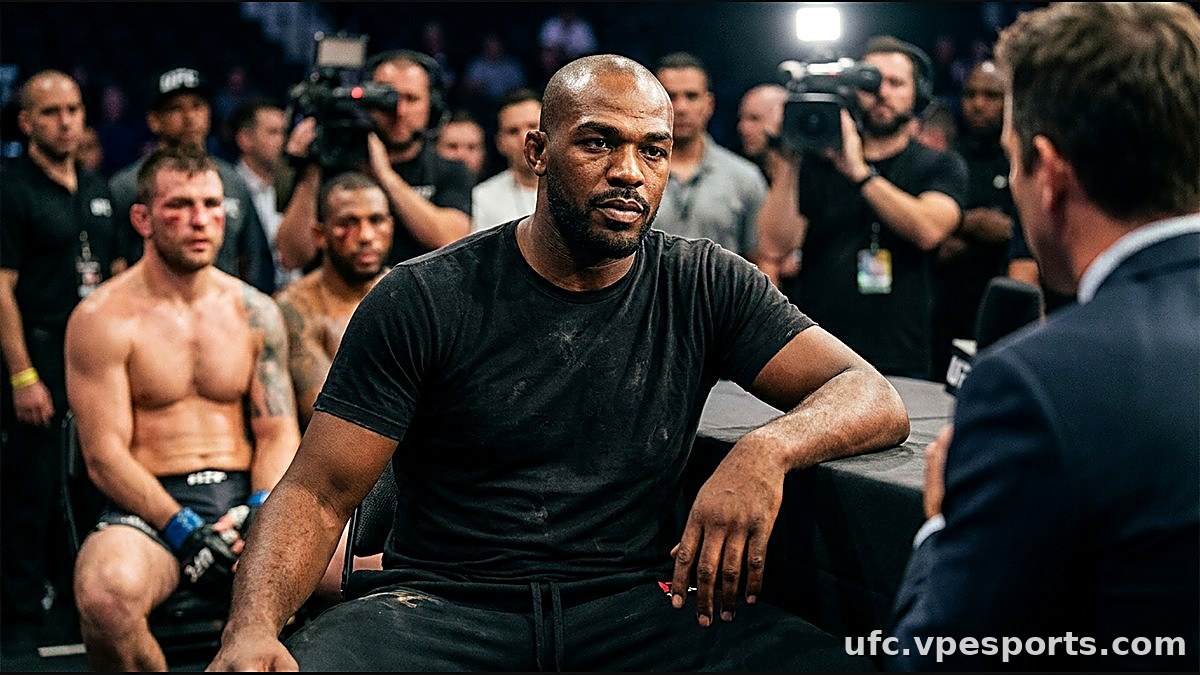
Jon Jones and Rogan’s confidence concern
Rogan’s comments focused on what can happen when a developing fighter spends time with a person of Jones’ stature. “That’s the problem. You’re hanging out with a guy who’s the GOAT and you start thinking you’re the next guy,” Rogan said. He added that Steveson might become that fighter if he does the right things, but warned against believing it before it has happened. In Rogan’s formulation, elite fighting requires a mental balance rather than simple certainty. A fighter must be cautious while remaining confident, a tension Rogan called “this dance of the mind.” That framing keeps the attention on Jones’ possible influence without turning a comment about mindset into a proven cause of Steveson’s loss. Jones was reportedly shocked by the knockout defeat, and the discussion does not establish that he intended to foster overconfidence or that his coaching directly shaped the outcome.
The competitive sequence supplied more context for why Rogan’s observation drew attention. Steveson had been on the winning side of a stoppage in his UFC 329 debut just a few months before UFC 331. In his second appearance, Sharaf knocked him out in 12 seconds. That sharp change is the backdrop to Rogan’s warning that expectations can get ahead of accomplishment. Rogan also pointed to Kamaru Usman’s loss to Leon Edwards as an example of how quickly a fight can change, describing Usman as having won four rounds before a head kick cost him the title. The example was used to underline Rogan’s broader point about human vulnerability in combat sports, not to equate Jones, Steveson or Sharaf with the people in that separate fight. Jones’ prediction and coaching presence therefore remain part of the conversation, while the verified result remains Sharaf’s 12-second knockout.
What is established around Jon Jones
The available details support a narrow reading of the debate. Jones predicted a championship future for Steveson and has been gaining experience as a coach during Steveson’s MMA transition. Rogan then questioned whether being around Jones could have affected Steveson’s mindset. Separately, Colby Covington urged Steveson to cut ties with Jones after the UFC 331 knockout, while other people suggested Jones was responsible for Steveson leaving the cage prematurely in Los Angeles. Those reactions show that Jones became a focal point after the defeat, but they do not verify responsibility for the knockout. Rogan’s own remarks were more conditional: a fighter could become the next great one, but cannot assume that status before the work and results establish it.
- Jones predicted that Steveson could become champion by the end of 2026, placing a high expectation around the wrestler’s UFC path.
- Rogan’s stated warning was that closeness to a GOAT-level fighter can blur the line between earned confidence and premature belief.

| Confirmed point | Detail |
|---|---|
| Steveson’s UFC 329 appearance | He was on the winning side of a stoppage in his UFC debut. |
| Steveson’s UFC 331 appearance | Sean Sharaf knocked him out cold in 12 seconds during Steveson’s second UFC appearance. |
Jon Jones remains the central figure in Rogan’s post-fight question because of his prediction for Steveson and his growing coaching role. Still, the confirmed development is a discussion about possible influence, not a finding of fault. Rogan’s message was that potential remains conditional on the right work and mindset, especially after a result as abrupt as Steveson’s loss to Sharaf.

Fight Talk
Share your take on this story
Start the Conversation
Be the first to share your take. Discuss the fight, reactions, and predictions with other fans.