

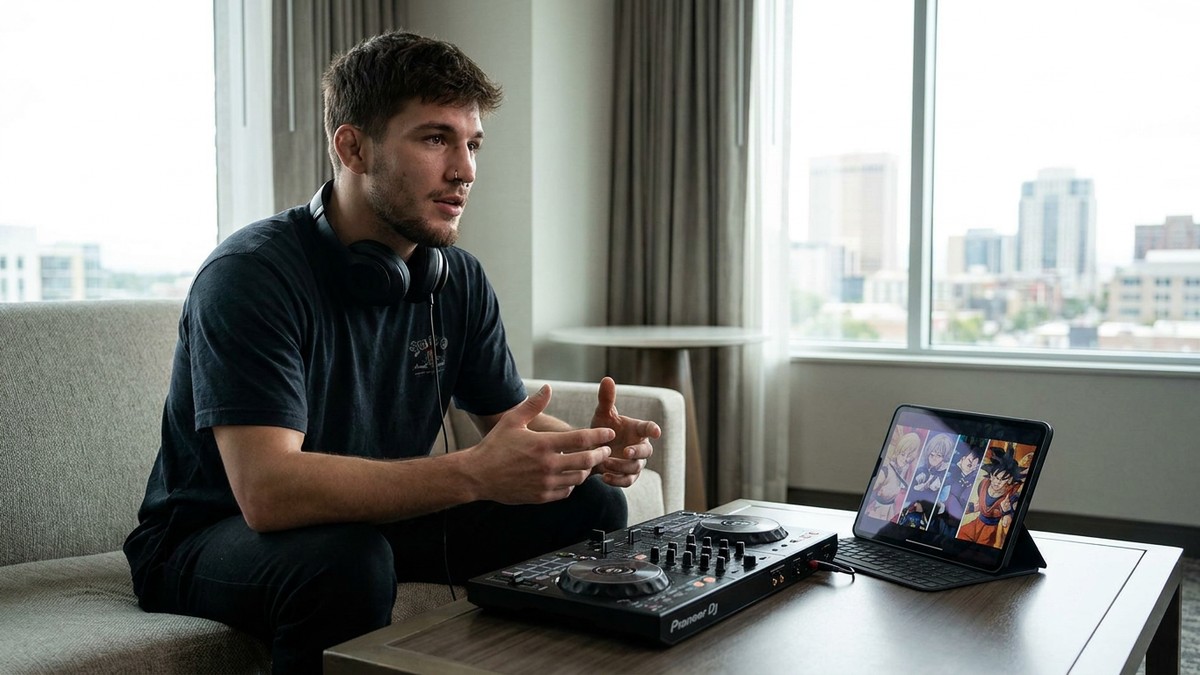
Payton Talbott is the focus of a new conversation built around the parts of his life that do not begin and end with a fight card. In Part 4 of MMA Fighting’s Anything But Fighting series, the fast-rising UFC bantamweight joins Jose Youngs to look back at the last 10 months and discuss interests that extend beyond the Octagon. The format gives Talbott room to address his budding DJ career, the ending of Chainsaw Man, his love for Serial Experiments Lain and his current favorite video games. It is a portrait of Talbott through subjects that are personal, creative and recreational rather than a conventional breakdown of tactics or an opponent.
That wider conversation arrives with a major UFC assignment identified alongside it. Talbott, listed at 11-1, looks to continue his winning ways against former flyweight champion Deiveson Figueiredo in the co-main event of UFC 332. The setting is Salt Lake City, where the UFC 332 media-day coverage features competitors on the card. The contrast is clear: Talbott’s upcoming bout provides the competitive backdrop, while this installment is deliberately centered on what occupies his attention away from fighting. That distinction matters because the discussion does not turn Talbott’s music, viewing habits or gaming preferences into evidence for a fight prediction. Instead, those topics give the interview a different purpose, allowing Talbott to reflect on his recent life in his own terms.
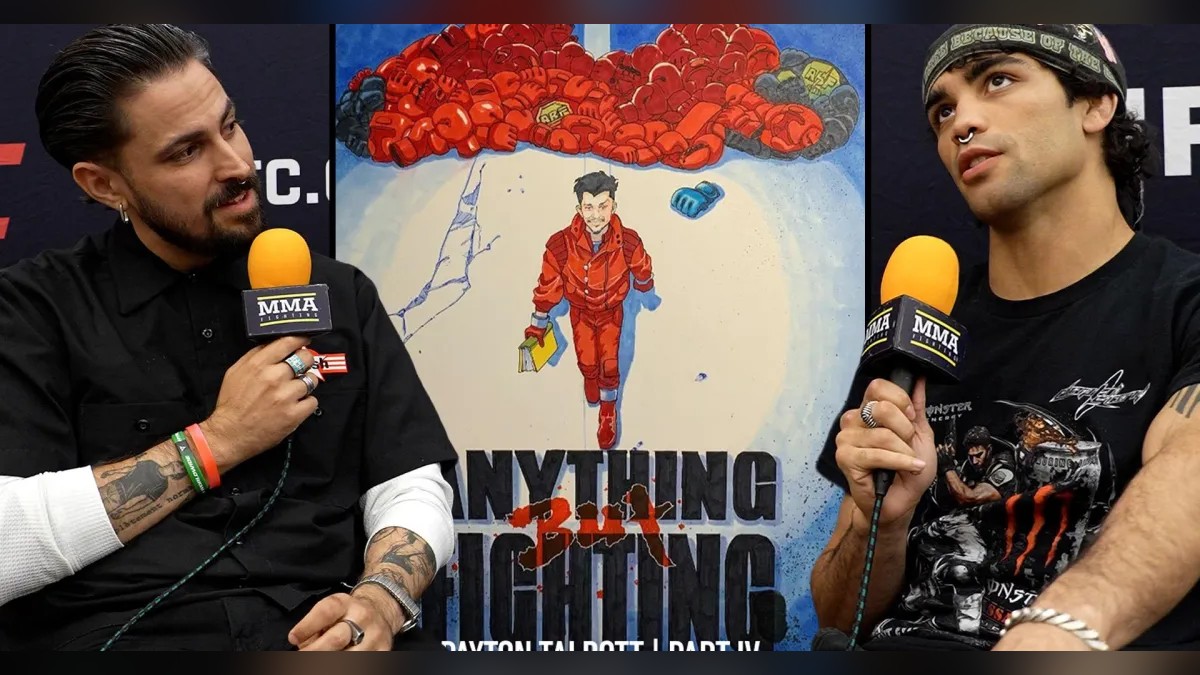
Payton Talbott’s conversation has a wider frame
Talbott’s appearance is explicitly about “anything but fighting,” and the subjects named in the conversation support that approach. His reflection on the past 10 months provides the personal timeline of the interview, while his budding DJ career gives the feature a creative thread. The discussion also moves into entertainment and gaming through the ending of Chainsaw Man, Talbott’s affection for Serial Experiments Lain and the video games he currently favors. None of those subjects replaces the UFC context around Talbott, but together they establish why the video is different from a standard pre-fight media appearance. It offers a collection of topics that reveal where his interests have been directed outside competition. The interview’s value lies in that range. Talbott is not presented only through a forthcoming co-main event; he is also discussing the things he watches, plays and pursues away from the cage. His DJ work is described as budding, which keeps the emphasis on an emerging creative pursuit rather than overstating its place in his career. Likewise, the references to Chainsaw Man and Serial Experiments Lain are presented as subjects of conversation, not as claims about how Talbott trains or competes. The result is a more rounded account of the bantamweight’s recent life without losing sight of the fight setting around him.
The competitive context remains substantial even though it is not the interview’s main subject. Talbott looks to continue his winning ways when he meets Figueiredo, a former flyweight champion, in the UFC 332 co-main event. That is the confirmed next fight context attached to the conversation, and it explains why Talbott is part of the event’s media-day coverage in Salt Lake City. The account does not provide a prediction, a method of victory or any scorecard scenario for that matchup, so the significance here is straightforward: Talbott enters the event with a chance to extend a run of wins. His most recent outing supplies the clearest career reference point. The Reno native ran through former two-division champion and Olympic gold medalist Henry Cejudo at UFC 323 in December. That result is presented as Talbott’s latest appearance, not as a basis for assumptions about what will happen against Figueiredo. It does, however, give the UFC 332 booking immediate context. Talbott’s discussion of life beyond fighting is being released after that most recent performance and before the co-main event in which he seeks to keep winning.
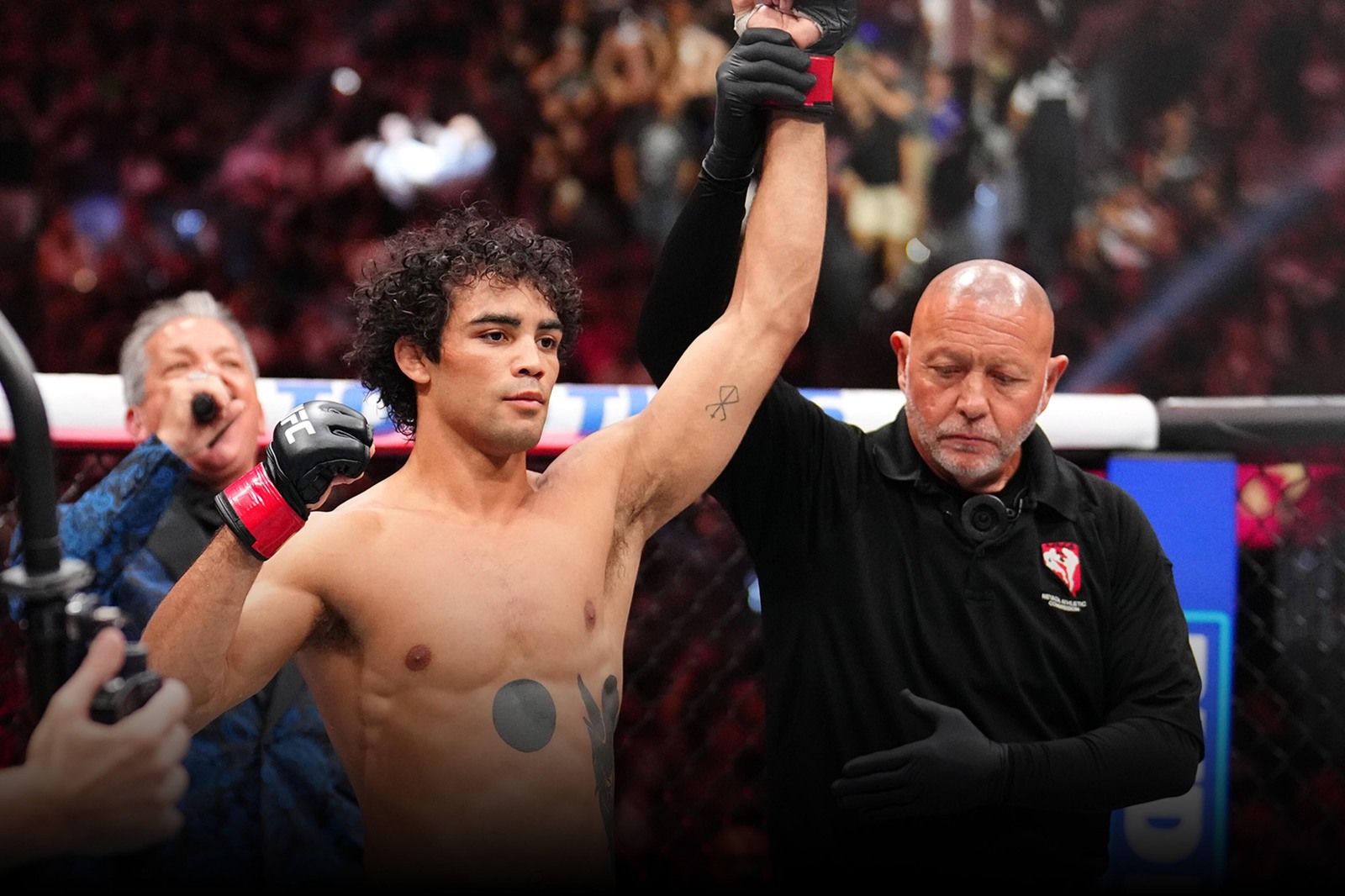
Recent fight context beside the interview
The two sides of the update can be read together without confusing their roles. Talbott’s interview material is about reflection and interests outside MMA, while the UFC 332 information identifies the competition waiting around the event. His 11-1 record, the co-main event with Figueiredo and the UFC 323 outing against Cejudo provide the verified fighting framework. The DJ discussion, anime interests and game choices provide the human-interest framework. That separation keeps the focus on Talbott. He is the person discussing the last 10 months, the artistically minded pursuit described as a budding DJ career, and the entertainment interests named in the feature. He is also the fighter looking to continue winning in Salt Lake City. Taken together, those confirmed details show why the conversation has room for both a personal reflection and a concise reminder of the UFC moment surrounding it.
- Talbott reflects on his life over the last 10 months and his budding DJ career.
- Talbott discusses the ending of Chainsaw Man, his love for Serial Experiments Lain and his current favorite video games.
| Focus | Confirmed detail |
|---|---|
| Upcoming UFC context | Talbott looks to continue his winning ways against Deiveson Figueiredo in the UFC 332 co-main event. |
| Most recent outing | The Reno native ran through Henry Cejudo at UFC 323 in December. |
Payton Talbott’s Part 4 conversation keeps its attention on the interests and experiences that sit outside a fight-week script. The upcoming UFC 332 co-main event with Figueiredo remains the competitive backdrop, while Talbott’s reflections on recent months, DJ work, anime and games supply the feature’s central material. His UFC 323 outing against Cejudo adds the most recent career context, but the interview’s defining angle is Talbott speaking about more than fighting.
Fight Talk
Share your take on this story
Start the Conversation
Be the first to share your take. Discuss the fight, reactions, and predictions with other fans.